A Global Multinational Registry Tracking Rare Adverse Malignant Cardiac Events after Atrial Fibrillation Ablation
Traceafib@gmail.com
Sudden/unexplained death or cardiac arrest occurred in ~1 in 5,000 patients after atrial fibrillation ablation in the MANIFEST-US registry. Studying these rare events will require learning from the patient, clinical and procedural characteristics of the rare patients who suffer these early unexplained deaths.
TRACE-AF will be a retrospective patient-level registry of all patients who suffered sudden/unexplained death, generalized coronary vasospasm or malignant arrhythmia early after catheter ablation of atrial fibrillation or related arrhythmias.
Why TRACE-AF?
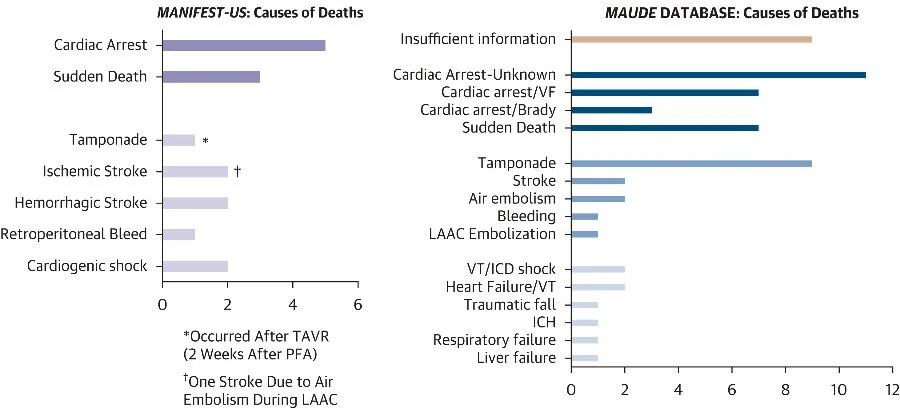
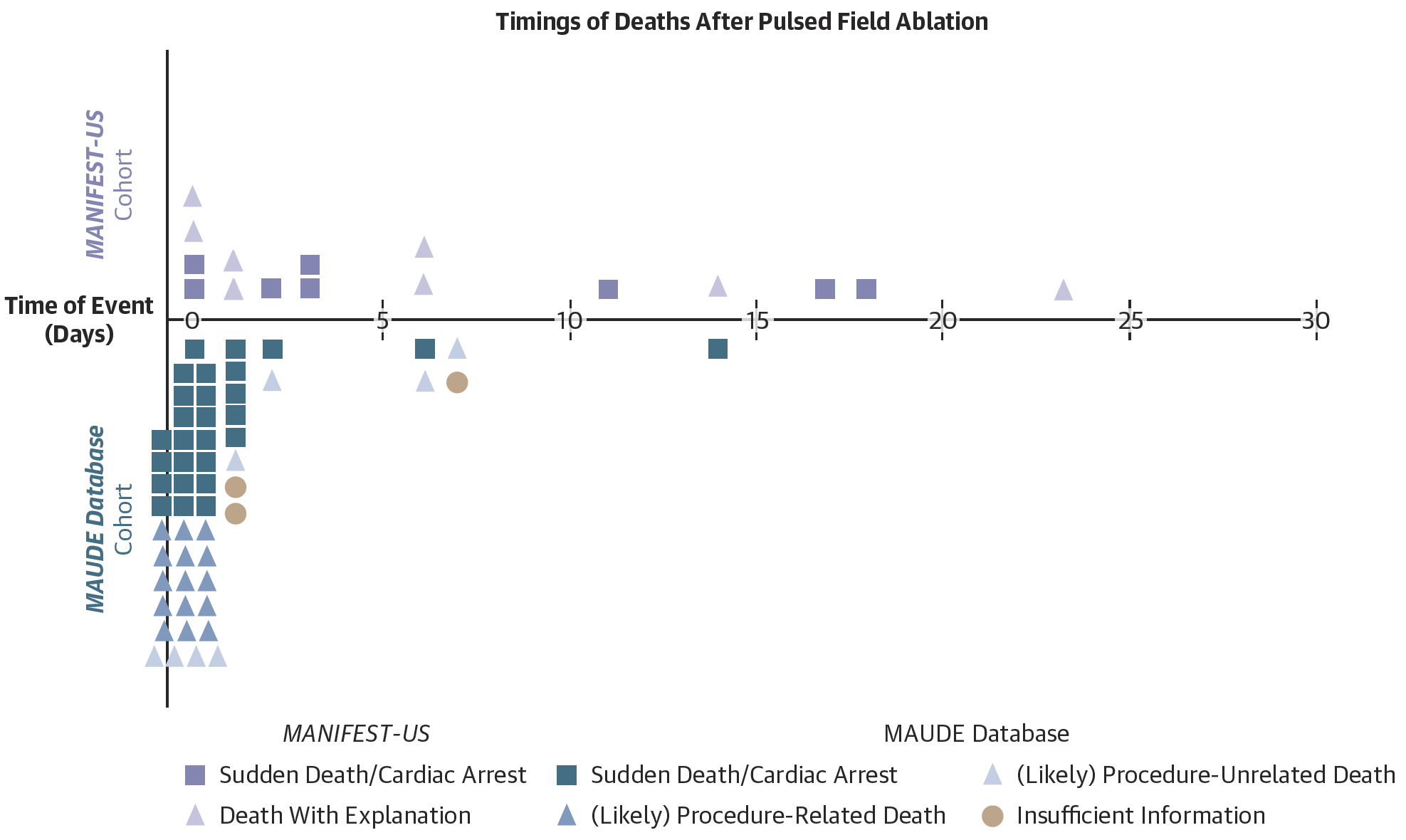
*MANIFEST-US. J Am Coll Cardiol. 2026; 87 (2): 172-193. PMID: 41389071
Which patients are we interested in studying?
Any patient who has had a sudden or unexplained death within 30 days of a catheter ablation procedure for atrial fibrillation or atrial flutter (using any technology).
Any patient who experienced a malignant arrhythmia (including cardiac arrest) or delayed coronary spasm within 30 days of an atrial fibrillation ablation procedure and survived.
If you are unsure if a patient should be included, please err on the side of having a quick conversation with us to ascertain inclusion
What information are we interested in gathering?
Patient demographics
Medical and medication history
Procedure/anesthesia details
Peri-procedural imaging (e.g. TTE, TEE, ICE, CT, coronary angiogram, MRI, PET)
All rhythm monitoring (e.g. ECGs, Holters, telemetry, CIED [ICM, PPM, ICD])
Details of sudden death
Autopsy
Contact Us
Interested in working together? Please provide us your contact information and we will be in touch shortly.
Steering Committee
Julian Chun, MD (CardioVascular Center Bethanien)
Edward Gerstenfeld, MD (University of California, San Francisco
Melanie Gunawardene, MD (Asklepios Hospital St. Georg)
Pierre Jais, MD (University of Bordeaux)
Moussa Mansour, MD (Massachusetts General Hospital)
Francis Marchlinski, MD (University of Pennsylvania)
Devi Nair, MD (St. Bernards Heart & Vascular)
Andrea Natale, MD (Texas Cardiac Arrhythmia Institute
Petr Neuzil, MD (Na Homolce Hospital)
Vivek Reddy, MD (Mount Sinai Fuster Heart Hospital)
Prashanthan Sanders, MD (University of Adelaide)
Kazuhiro Satomi, MD (Tokyo Medical University Hospital)
Atul Verma, MD (McGill University)